
Flex Circuits Enable
The use of flex circuits allows designers to achieve significant reductions in component size and space. Additionally, they offer many other design and manufacturing benefits compared to rigid board alternatives. These include:
Eliminating or reducing wiring results in reduced assembly costs. This is due to a decrease in the number of wires, a reduction in the amount of time spent making the connections, and elimination of any potential points of human error.
Most failures occur at an interconnection point in a circuit. By replacing point-to-point wires with a single flex circuit, we can eliminate these points of failure and significantly increase the reliability of your device.
The smaller profile of a flex circuit allows you to pack more components in tighter spaces. This also increases your signal integrity, allowing higher speeds of operation. The thinner design of a flex circuit allows it to dissipate heat faster. This increases the lifespan of your device and reduces the risk of overheating.
Flex PCBs are ideal for the Internet of Things (IoT) ecosystem. They allow for the integration of small sensors and wearable devices into a range of applications. They can withstand a wide variety of mechanical strains, including bending, rolling, and folding, making them suitable for even the most compact products.
Flexible circuits are a key enabler of miniaturization because they are capable of fitting into spaces that would be inaccessible to other components. They are also able to absorb vibrations, resulting in minimal damage and improved performance. Moreover, they can be integrated into the most complex of structures and can be used for applications that require high-speed digital signals.
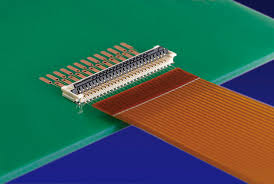
Flex Circuits Enable Miniaturization
Lastly, a flex circuit can easily adapt to changes in environmental conditions. For instance, it can adjust power usage to match the needs of your device during different phases. In an advanced balloon control system, a flex circuit could monitor the condition of the balloon, ensuring that energy is only being consumed when needed.
To produce a flex PCB, you must start by selecting the appropriate base material, copper foil thickness, and adhesive. The layout of the circuit should then be designed using PCB software, ensuring that any flex areas are carefully planned to minimize stress. The etching process is then executed, with the unwanted copper being removed from the foil per precise design specifications. The final product is then visually examined for contaminants and scratches.
Single-sided flex circuits have one conductor layer that can be accessed from either side of the base film. Double-sided flex circuits have two conductor layers and can be constructed with or without plated through holes, though the latter is more common.
Rigid-flex circuits are hybrids that combine rigid and flexible substrates laminated together into a single structure. They are a good choice for designs that require the strength of rigid boards, but need the flexibility of a flex circuit to fit into tighter spaces.