
Number of Layers in a Flexible PCB
The answer to the question of how many layers a flexible PCB can have is not as simple as it might seem. The answer depends on a number of specifications, including copper thicknesses and impedance requirements that can impact the flexibility of the board. In fact, the ability to bend a multilayer rigid-flex board varies widely and can change from one design to another, even between different manufacturers.
Rigid-flex boards consist of a multilayer stackup of circuit layers, adhesive and cover layers pressed together through lamination and then drill-mounted with metalized holes to connect the layers to each other. The layer stackup is then bent to create a flex circuit.
flexible pcbs are used in a wide range of applications and can be very small. They can be single-sided – with a conductive copper layer on one side of the dielectric material – or double-sided, with the conductive layer on both sides. The circuitry is arranged on the top and bottom layers in the form of traces, pads or connectors, and solder balls. In either case, the circuitry must be able to handle repeated bending cycles and be robust enough to resist shock & vibration.
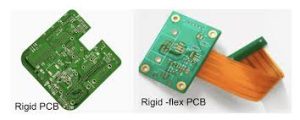
Are There Limitations on the Number of Layers in a Flexible PCB?
For these reasons, a multilayer construction is often the best choice for flexible pcbs. It can accommodate higher levels of I/O density, and multiple traces can be routed on separate layers to reduce interference and crosstalk, resulting in better signal quality. Additionally, more layers allow signals to be isolated across power and ground planes on the inner layers to achieve impedance control.
While there are some benefits to using more layers, the layer count also impacts flexibility. For example, increasing the copper weight from one-third to one-half ounce on all layers will increase the overall board thickness by 0.002″ or more, which can dramatically affect the minimum allowed bending radius. This makes it important to model the mechanical properties and performance requirements of a product and choose the right materials for the job.
A high-quality flex PCB is made from an advanced network epoxy resin with a polyimide core, which is extremely durable and tolerant of solder reflow cycles, temperature fluctuations, and environmental stresses like bending. It is also abrasion resistant and resists scratching. It is possible to find a variety of flex materials with different characteristics, such as thermal expansion, chemical resistance, and dielectric loss, all of which should be evaluated during the product design process to ensure that a flex PCB will meet your needs.
A multilayer flex PCB can be designed to include a variety of dielectrics, including FR4, FR5, and PTFE, which are all available in different thicknesses to suit the specific needs of a particular application. Moreover, it is important to select the correct copper layer thickness for the application to optimize both cost and flexibility. Typically, a four-layer stackup will be adequate for most flexible PCB designs, and can accommodate the I/O density of complex or high speed circuits.